A national research priority
Scientific machine learning supports national initiatives in artificial intelligence, advanced computing and interdisciplinary research, with applications in climate, energy, healthcare and engineering.
An ANRF-sponsored five-day workshop on
Theory, Methods and Applications
RACM–SciML 2026
to the inaugural session
In the past two years, artificial intelligence has progressed from solving standard exercises to contributing to research in mathematics. This development is changing how mathematical problems are explored, proved and verified.
AI can now generate conjectures, constructions and proofs at great speed. However, establishing that a result is correct, stable and meaningful continues to depend on rigorous mathematical analysis.
A similar change is taking place in applied mathematics, where neural networks are now used to solve differential equations and to model physical systems. RACM–SciML 2026 addresses this area directly.
Neural network solvers can produce results quickly, but their reliability must be established. Convergence, stability and error analysis provide the basis for this.
Finite element, spectral and meshfree methods are studied alongside physics-informed neural networks and neural operators, with attention to the strengths and limitations of each.
Participants implement and test physics-informed solvers in Python under the guidance of the resource persons.
Scientific machine learning offers open problems in theory, algorithms and applications to energy, fluid dynamics and biology, providing research opportunities for students and young faculty.
RACM–SciML 2026 is an ANRF-sponsored workshop at RGIPT Jais, Amethi, Uttar Pradesh, India, connecting computational mathematics with scientific machine learning. Held in hybrid mode from 12–16 December 2026, it covers physics-informed neural networks (PINNs), numerical methods for differential equations and operator learning, with hands-on Python sessions for students, researchers and faculty.
Neural networks are increasingly used to solve differential equations. Convergence theory, stability and error analysis remain essential for judging the reliability of their solutions.
This five-day hybrid workshop, organised by the Department of Mathematical Sciences, RGIPT, brings the two worlds together. Participants revisit the analytical and numerical foundations of differential equations, then see how neural-network-based solvers extend, complement and sometimes challenge them.
Mornings are lectures on theory and convergence from leading researchers. Afternoons are hands-on coding sessions in Python, so you leave able to implement, test and critically assess both classical schemes and physics-informed solvers on problems of your own.
Scientific machine learning supports national initiatives in artificial intelligence, advanced computing and interdisciplinary research, with applications in climate, energy, healthcare and engineering.
Lectures by experts from IISc, IITs, Brown University and WUR on finite elements, domain decomposition, PINNs and operator learning.
Guided laboratory sessions in NumPy, PyTorch/TensorFlow and DeepXDE. Participants develop working notebooks that can be extended for theses and research projects.
Discussions with speakers and peers help students and young faculty identify open research questions.
RGIPT was established by an Act of Parliament in 2007 as an Institute of National Importance. It is an energy-focused institute under the Ministry of Petroleum and Natural Gas, Government of India, offering B.Tech., M.Tech., MBA and Ph.D. programmes across engineering, management and the sciences.
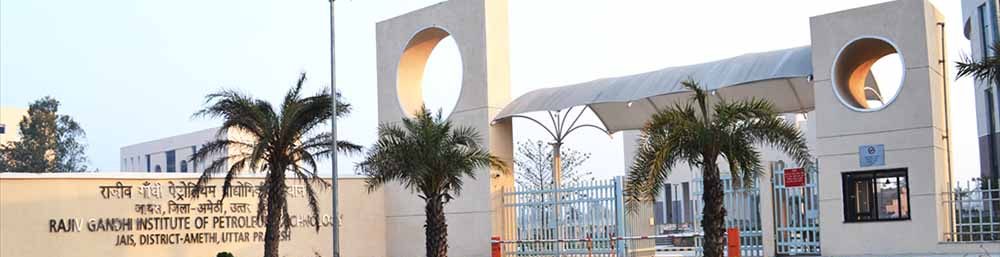
The Jais campus in Amethi hosts the workshop. Its research facilities include a Central Instrumentation Facility, a Design and Innovation Center, and a Centre of Excellence for AI/ML in the petroleum and energy sector, a natural home for scientific machine learning.
Visit rgipt.ac.in →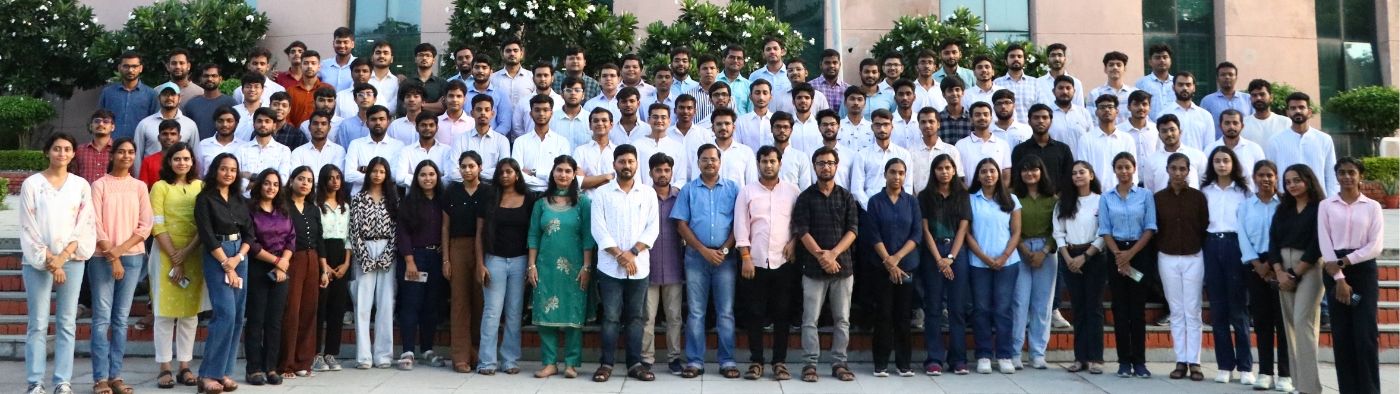
The department became a full-fledged department in 2021 and offers undergraduate, postgraduate and doctoral programmes, including the B.Tech. in Mathematics and Computing (since 2021–22), which trains students in computation, mathematical and statistical modelling, and simulation. It also teaches mathematics and statistics to every other department of the institute.
Visit the department website →Patron
Chairperson
Convener
Organising committee members
The programme covers these topics, but is not limited to them.
The numerical analysis workshop sessions explore scientific computing, numerical methods for differential equations, boundary value problems and finite element methods. Discussions of convergence, stability and error analysis connect mathematical theory with reliable computation.
The physics-informed machine learning sessions introduce neural network solvers for differential equations, automatic differentiation, PINN training and domain decomposition. The operator learning sessions cover DeepONet, Fourier neural operators and hybrid numerical–neural methods.
Hands-on Python sessions support practical learning with PyTorch and DeepXDE. Students, research scholars and faculty interested in an AI for science workshop can connect these methods to applications in energy, fluid dynamics and engineering. Online and on-campus participation make this a hybrid scientific computing workshop in Uttar Pradesh.
Explore the profiles, research interests and selected contributions of our distinguished speakers.
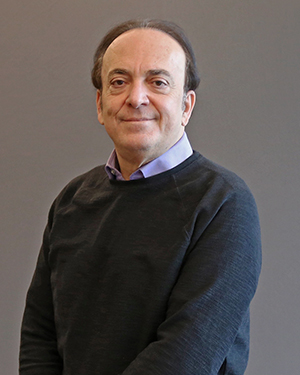
Charles Pitts Robinson and John Palmer Barstow Professor of Applied Mathematics
Brown University, USA
Scientific machine learning; physics-informed neural networks; stochastic multiscale modelling
Prof. Karniadakis develops computational methods that connect applied mathematics, scientific computing and machine learning. He received his Ph.D. from MIT and was elected to the US National Academy of Engineering in 2022 for contributions spanning computational algorithms and applications to complex physical systems.
Ranked #1 worldwide in mathematics in Research.com’s 2026 ranking, as reported by Brown University. See Google Scholar for current citation figures.
Professor, Department of Mathematical Sciences
IIT (BHU), Varanasi, India
Numerical PDEs; wavelets; fractional differential equations; image processing and AI
Prof. Rajesh Kumar Pandey works at the intersection of numerical analysis, fractional differential equations and image processing. He obtained his doctorate from the Institute of Technology, Banaras Hindu University, and is a Professor of Mathematical Sciences at IIT (BHU), Varanasi.

IISc Bangalore
Scientific computing, finite element methods
View profile
Professor (HAG), Department of Mathematics
IIT Guwahati, India
Singular perturbations; PINNs; fractional equations; domain decomposition; CFD
Prof. Srinivasan Natesan is Professor (HAG) in the Department of Mathematics at IIT Guwahati. His work brings numerical analysis and parallel computation together with applications in differential equations, scientific machine learning and multiscale modelling.
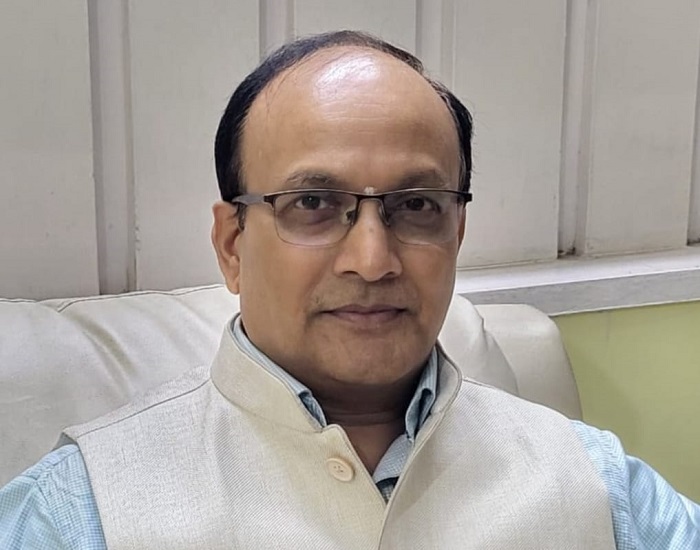
Professor, Department of Mathematics
IIT Kanpur, India
Numerical methods for PDEs; numerical analysis; scientific computing; fluid dynamics; AI/ML
Prof. B. V. Rathish Kumar is a Professor in the Department of Mathematics at IIT Kanpur. His research connects numerical analysis and scientific computing with the modelling and simulation of fluid flows, including artificial intelligence and machine-learning methods for partial differential equations.
Professor, Department of Mathematics; Joint Faculty, Mehta Family School of Data Science and AI
IIT Roorkee, India
Mathematical image processing; computational imaging; machine learning
Prof. Sanjeev Kumar develops mathematical and computational approaches to imaging and machine learning at IIT Roorkee. His interests span image recovery, secure imaging and three-dimensional reconstruction, alongside learning-based methods for image analysis.

IIT Ropar
Mathematical finance, ML in finance, applied probability, stochastic processes
View profile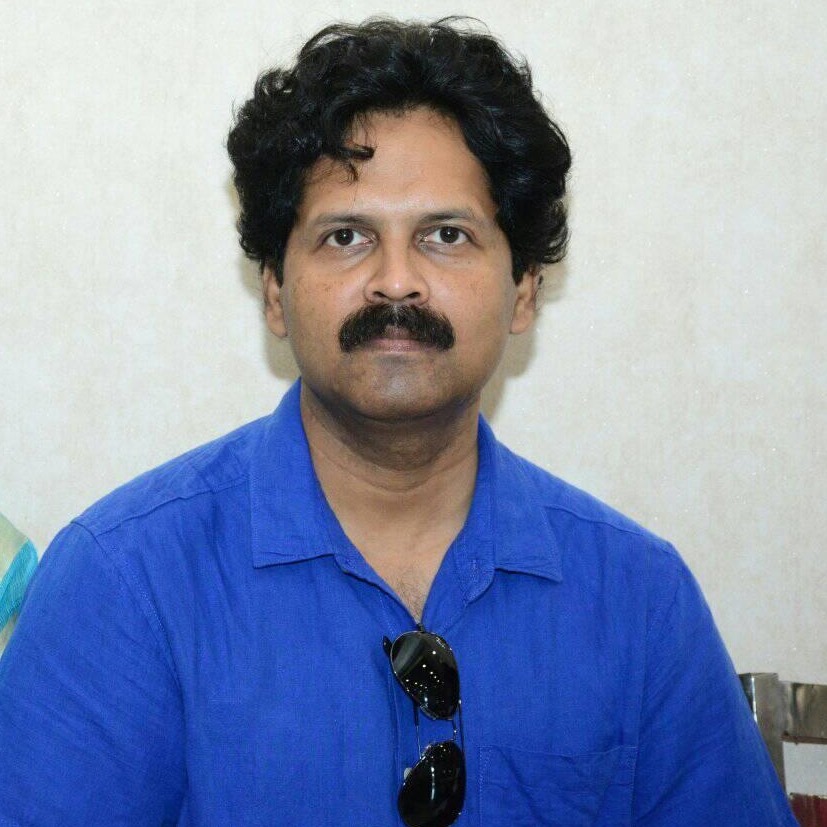
Associate Professor, Department of Mathematics
IIT Patna, India
Numerical analysis; differential equations; scientific machine learning
Dr. Amit K. Verma is an Associate Professor of Mathematics at IIT Patna. His research includes the analysis and numerical solution of nonlinear differential equations and boundary value problems, with interests extending to scientific machine learning.
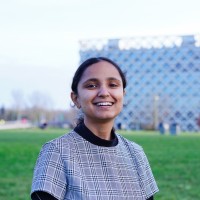
Assistant Professor, Artificial Intelligence Group
Wageningen University & Research, Netherlands
Machine learning for science; physics-informed modelling; scientific machine learning
Dr. Taniya Kapoor develops machine-learning models informed by differential equations and physical principles to address scientific and engineering challenges. She earned her Ph.D. at TU Delft and subsequently held an AI Schmidt Postdoctoral Fellowship at the University of Oxford.
Speaking at the workshop? Session format, travel, stay and the speaker information form are in the speakers' corner.
Speakers' cornerTentative programme. Select a day to see the full session timings. Talk titles and speakers will be added as they are confirmed.
Labs use Python. Prepare your laptop before the workshop so you can follow the hands-on sessions.
Nothing to install. Sign in to Google Colab with any Google account and check that a notebook opens. Bring a laptop and charger.
Install Python 3.10+ (Anaconda or python.org), then run:
pip install numpy scipy matplotlib torch deepxde jupyter
A first course in ODEs and PDEs, and basic Python (arrays, loops, plotting), is all you need. Recordings, notes, slides and notebooks will be shared where provided or permitted by the speakers.
Registration is open.
Seats are limited. Selection is intimated within one week after registration. The offline fee includes a registration kit, food during the workshop, hostel accommodation and a participation certificate. Guest-house accommodation is subject to availability and institute norms.
To complete your registration, kindly pay the applicable fee and fill in the registration form with your transaction ID, payment receipt, and a valid institutional or government-issued ID card. You will receive a registration number and an acknowledgement by email upon submission. Selection is intimated within one week after registration. You will be notified by email. We look forward to welcoming you to the workshop!
Offline participants: lectures, hands-on sessions, questions and discussions, a registration kit, food during the workshop, hostel accommodation and a participation certificate. Guest-house accommodation is subject to availability and institute norms.
Online participants (Indian nationals: ₹500; foreign nationals: US$30): live access to lectures and hands-on sessions, opportunities to ask questions, and a participation certificate.
For both modes: Recordings, notes, slides and notebooks will be shared where provided or permitted by the speakers.
Refund policy: Registration fees are non-refundable, subject to applicable rules and regulations.
Partial travel expenses will be reimbursed for UG/PG students attending in person. Support is limited and allotted on a first come, first served basis, so register early.
Support is partial and depends on the number of eligible participants.
Planning to register later? Leave your email and we will help you remember the 20 November 2026 deadline.
Enter the certificate ID printed at the bottom of a RACM–SciML 2026 certificate.
Online participation is available. However, attending in person offers greater opportunities for interaction and learning.
On-campus participants receive direct assistance from the resource persons during the laboratory sessions.
Breaks and informal sessions allow participants to discuss research, doctoral and postdoctoral opportunities with senior researchers.
Hostel accommodation is included in the offline registration fee. Guest-house accommodation is subject to availability and institute norms.
Ayodhya, Lucknow, Prayagraj, Varanasi and Kanpur are within a few hours of the campus.
To our speakers: we would be pleased to welcome you on campus. Your presence offers participants from across the country a valuable opportunity for direct academic interaction.
Department of Mathematical Sciences, RGIPT Jais, Amethi, Uttar Pradesh, India
Rajiv Gandhi Institute of Petroleum Technology, Jais, Amethi, Uttar Pradesh 229304, India, an Institute of National Importance established by an Act of Parliament in 2007.
By airLucknow CCS International Airport, about 110 km (2.5–3 h by road). Ayodhya and Prayagraj airports are alternatives with fewer flights.
By railGuru Gorakhnath Dham Railway Station (station code: GUGD), formerly Jais Railway Station, is only about 5 minutes from RGIPT, and major trains stop there. Raebareli Junction and Lucknow Charbagh offer wider connectivity.
By roadThe institute is on the Raebareli–Sultanpur highway. Direct buses run from Delhi to Raebareli, and from Raebareli bus station buses towards Sultanpur pass the institute. Taxis are available from Lucknow and Raebareli.
December weather: pleasant days and cold nights, often below 10 °C, with dense morning fog that can delay trains and flights. Pack warm clothing and keep buffer time.
Distances are approximate road distances; check a map app for your route.
Jais sits in the heart of Awadh. Five historic cities are within a day's reach; extend your trip by a day or two.
Temple town on the Saryu
~125 km · 3 hTip: mobile phones and bags are not allowed inside the Ram Mandir; use the lockers and start early to avoid queues.
City of Nawabs
~120 km · 3 hTip: if you fly in, spend your arrival or departure day here.
Where three rivers meet
~135 km · 3 hTip: morning boat rides are calmest; carry a shawl, the river breeze is cold in December.
The oldest living city
~240 km · 5 hTip: plan it as an overnight trip, ideally after the valedictory session.
Industrial and academic hub
~165 km · 3.5 hTip: Kanpur Central is a major rail hub, handy for onward travel west.
Travel times are approximate by road and vary with traffic and fog.
Email: racmsml2026@gmail.com
Convener: soniyad@rgipt.ac.in
Department of Mathematical Sciences, RGIPT, Jais, Amethi, Uttar Pradesh 229304, India
UG and PG students, research scholars, postdoctoral fellows, faculty and professionals in mathematics, computational science, engineering and allied disciplines.
No. A first course in differential equations and basic Python is enough. The workshop builds from foundations to current research.
A laptop with Python installed for the hands-on sessions, your ID card, and warm clothing.
A joining link is emailed to confirmed online participants before the workshop. The online fee (₹500 for Indian nationals; US$30 for foreign nationals) includes live lectures, hands-on sessions, opportunities to ask questions and a participation certificate. Recordings, notes, slides and notebooks will be shared where provided or permitted by the speakers.
Offline UG/PG students, partially and on a first come, first served basis, within the available budget. See travel support.
Hostel accommodation is included in the offline fee. Guest-house accommodation is subject to availability and institute norms. Request accommodation while registering.